
Cosmetic
Teeth whitening
A brighter shade, with honest advice on what to expect
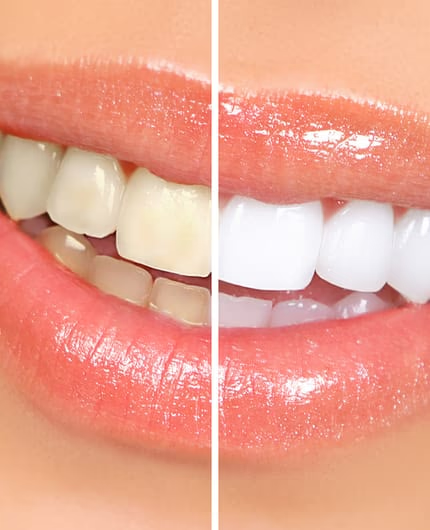
Teeth often darken with age, coffee, tea, red wine or smoking. Professional whitening can lighten their natural shade under a dentist’s guidance. Dr. Hazaveh checks your teeth first and tells you plainly what whitening can and can’t do.
Works on
Natural enamel
01
Sensitivity
Often mild and brief
02
Results
Vary from person to person
03
Whitening works best when it brightens your smile without making it look like someone else’s.
What it is
Whitening uses a peroxide-based gel to break down stains inside the enamel and lighten the overall shade of your teeth. It works well on yellowing from age and on stains from coffee, tea, red wine and tobacco. It does not change the shape of teeth, and it won’t lighten crowns, veneers or tooth-coloured fillings.
Professional whitening differs from store-bought products because a dentist checks your teeth first and guides the process. That matters, as whitening can increase sensitivity, and cavities, worn enamel or receding gums are best dealt with beforehand. It also means you get advice on a realistic shade for your teeth.
Results vary. Yellowish stains usually respond well; greyish discolouration, often from certain medicines or an old injury, may lighten less. Results also fade gradually, so touch-ups are common. If whitening isn’t likely to give you the change you want, Dr. Hazaveh can talk through other options, such as veneers.
It may be right for you if
- Your teeth have yellowed over time
- You drink coffee, tea or red wine and notice staining
- Your teeth and gums are healthy
- You’re planning veneers or crowns and want to set the shade first
- You’d like a fresher look without changing the shape of your teeth
What to expect
01
A check first
Dr. Hazaveh examines your teeth and gums and notes any fillings, crowns or sensitive areas. Any decay or gum problems are usually treated before whitening begins.
02
Choosing a realistic shade
Your current shade is recorded so you can see the change later. We talk about how light your teeth are likely to go and which whitening approach may suit you best.
03
Whitening treatment
Whitening gel is applied to the teeth while the gums are protected, in the chair or with custom trays at home. How long it takes, and how many sessions are needed, depend on your teeth and the approach you choose.
04
Checking the result
Your new shade is compared with where you started. If you have crowns or veneers that no longer match, we can talk about whether they should be updated, and when.
Keeping your teeth bright
For a day or two after whitening, teeth can pick up stains more easily, so it helps to go easy on dark drinks and foods. Some sensitivity is common and usually fades within a few days. Over time, everyday staining returns gradually, and many people choose an occasional touch-up to keep their shade.
- Limit coffee, tea, red wine and smoking for 48 hours
- Use a toothpaste for sensitive teeth if needed
- Rinse with water after dark drinks
- Keep up regular cleanings to remove surface stains
- Ask us before adding store-bought whitening products
Questions
Anything we haven’t covered? Call us on (610) 779-0911 and ask.
When used as directed under a dentist’s guidance, whitening is generally considered safe for enamel. The most common side effect is temporary sensitivity. Overuse, especially of unsupervised products, can irritate gums and teeth, which is one reason to have your teeth checked first.
No. Whitening only lightens natural tooth structure. Crowns, veneers and tooth-coloured fillings keep their original shade, so they may stand out after whitening. If that’s a concern, Dr. Hazaveh can explain your options before you start.
It varies. Many people enjoy their results for months or longer, though stains return gradually with coffee, tea, red wine and smoking. Good brushing, regular cleanings and occasional touch-ups can help keep your shade.
Often, yes, with some adjustments. Mention any sensitivity at your visit. A gentler approach or a toothpaste for sensitive teeth may help. Sensitivity from whitening is usually temporary and settles once treatment ends.
Most adults with healthy teeth and gums can. Whitening is often postponed during pregnancy or breastfeeding and is generally not advised for young children. A quick check settles whether it’s a good choice for you.
Ready when you are. Call us and we’ll find a time that suits you
Mon–Fri 8am–7pm · Sat 8am–2pm · Sun closed
Call (610) 779-0911Related care
All services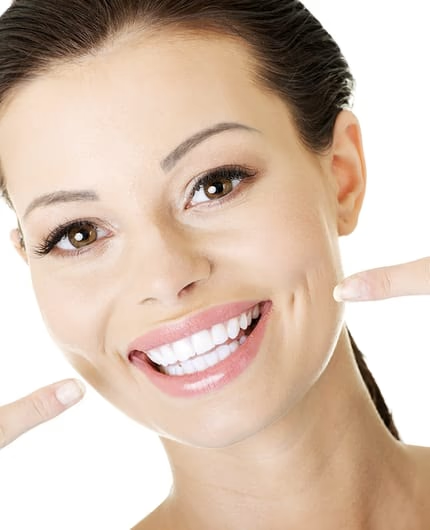
Cosmetic makeovers
A smile makeover combines veneers, whitening, crowns or bonding into one plan, designed around your face and bite by Dr. Kami Hazaveh.
Learn more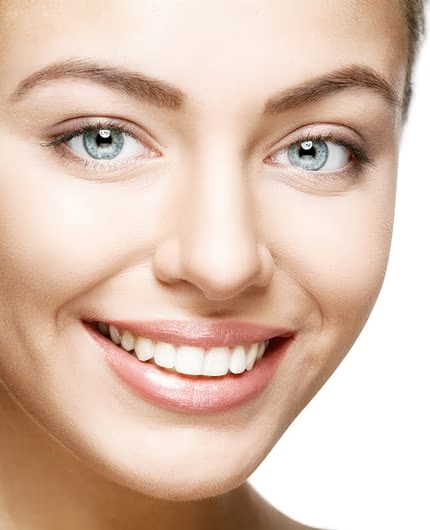
Porcelain veneers
Thin porcelain shells bonded to the front of teeth to improve their shape, colour and line, designed and made in-house by Dr. Kami Hazaveh.
Learn more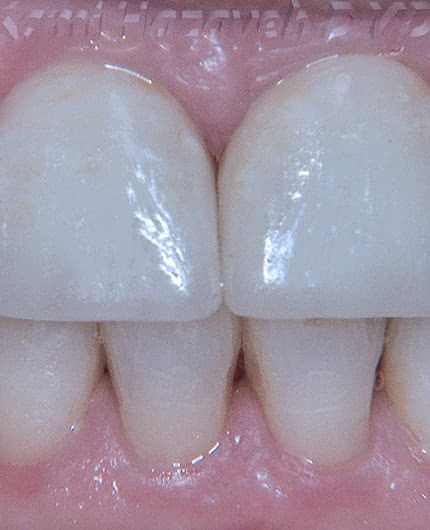
Crowns and bridges
A crown caps and protects a damaged tooth; a bridge fills the gap left by a missing one. Both are designed and made in-house to match your teeth.
Learn more- 08 Every treatment, from whitening to All-on-4 All services