
Implants
Dental implants
A steady, long-term way to replace a missing tooth
A dental implant replaces the root of a missing tooth. Once it has bonded with the bone, it holds a crown, bridge or denture that looks and works much like a natural tooth. Dr. Hazaveh plans each implant on a 3D scan and makes the tooth on top in-house.

Replaces
One tooth or several
01
Visits
Several, over months
02
Planned
On a 3D CBCT scan
03
An implant replaces the root as well as the tooth, which helps keep the jawbone beneath it healthy.
What it is
A dental implant is a small post, usually made of titanium, that is placed in the jawbone where a tooth is missing. Over the following months the bone grows closely around it. Once the implant is secure, a connector called an abutment is attached, and a custom crown, bridge or denture is fitted on top.
Because an implant stands on its own, the teeth beside the gap don’t need to be reshaped to support it, as they would for a traditional bridge. Implants are cleaned much like natural teeth, and with good home care and regular check-ups they often last many years. They can replace one tooth, several teeth, or support a full arch.
Not everyone is ready for an implant straight away. Healthy gums and enough bone are important, and some patients need gum treatment or a bone graft first. Smoking and some health conditions can slow healing. At your consultation, Dr. Hazaveh takes a CBCT scan, examines the area and talks through every option, including bridges and dentures.
It may be right for you if
- You’re missing one or more teeth and want a fixed, long-term replacement
- Your denture feels loose or makes eating and speaking difficult
- You’d rather not reshape healthy neighbouring teeth for a bridge
- A tooth is broken beyond repair and needs to come out
- Your gums are healthy, or you’re willing to treat them first
What to expect
01
Consultation and 3D planning
Dr. Hazaveh examines your mouth, reviews your health history and takes a CBCT scan to see the bone in 3D. The implant is placed virtually on the scan first. You’ll talk through options, timing and cost, and whether any preparation, such as a graft, is needed.
02
Placing the implant
The area is numbed and the implant is placed in the jawbone to the plan, often with a printed guide. Most patients describe pressure rather than pain. Anaesthesia and comfort options are discussed at your consultation, so you know what to expect.
03
Healing time
Over the next few months the bone bonds with the implant. Some patients can wear a temporary tooth in the meantime. Whether that’s possible depends on the site, and Dr. Hazaveh will tell you in advance.
04
Your new tooth
Once the implant is secure, an abutment is attached and the area is scanned. Your crown, bridge or denture is designed and made in-house to match the shape and shade of your natural teeth, then fitted and adjusted for a comfortable bite.
Healing well
Some swelling, tenderness and minor bleeding are normal for a few days after the implant is placed, and most people are back to their usual routine within a day or two. Over the long term, an implant needs the same care as a natural tooth, because the gum and bone around it can still become inflamed.
- Stick to soft, cool foods for the first few days and chew on the other side
- Use a cold pack on the cheek during the first day to ease swelling
- Brush gently around the site and rinse as directed
- Avoid smoking, which can slow healing and put the implant at risk
- Keep up regular check-ups and cleanings so the gum stays healthy
Questions
Anything we haven’t covered? Call us on (610) 779-0911 and ask.
The area is numbed before treatment, so most patients feel pressure rather than pain. Soreness for a few days afterward is common and is usually eased with over-the-counter pain relief. If you feel anxious, mention it at your consultation and Dr. Hazaveh will talk through your comfort options.
It varies. The implant usually needs a few months to bond with the bone before the final tooth is fitted, and longer if a graft is needed first. Your timeline is set at your consultation, once Dr. Hazaveh has examined the area and the scan.
With good home care and regular check-ups, implants often last many years. The crown on top may need replacing at some point because of normal wear. Smoking, gum disease and grinding can all shorten an implant’s life.
Age alone is rarely the deciding factor. What matters more is your general health, the condition of your gums and the amount of bone available. Many older adults have implants. A consultation is the best way to find out whether they suit you.
Dr. Hazaveh is a CareCredit provider, so you may be able to spread the cost into monthly payments, subject to CareCredit approval. The cost of your treatment plan is explained before anything begins.
Ready when you are. Call us and we’ll find a time that suits you
Mon–Fri 8am–7pm · Sat 8am–2pm · Sun closed
Call (610) 779-0911Related care
All services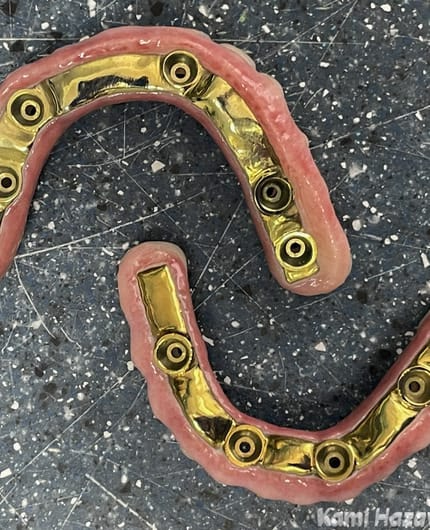
All-on-4
A full arch of fixed teeth held by four or more implants, for people missing most or all of their teeth. Planned in 3D and made in-house.
Learn more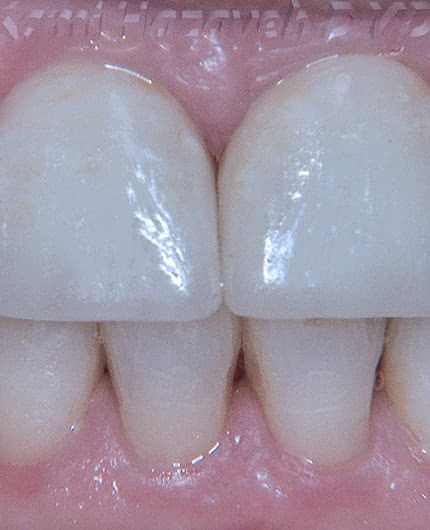
Crowns and bridges
A crown caps and protects a damaged tooth; a bridge fills the gap left by a missing one. Both are designed and made in-house to match your teeth.
Learn more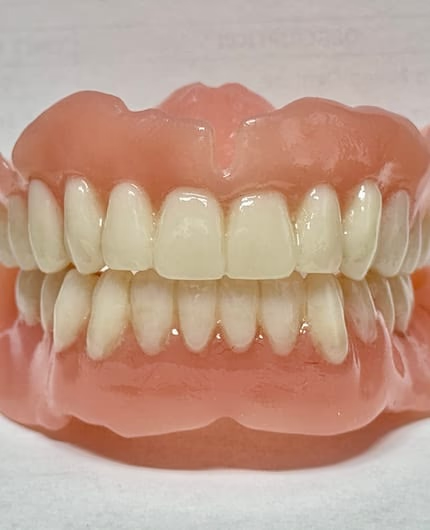
Dentures
Full and partial dentures, and implant-retained dentures that click into place, designed and made in-house to fit your mouth and suit your face.
Learn more- 08 Every treatment, from whitening to All-on-4 All services