
Cosmetic
Porcelain veneers
A thin layer of porcelain for teeth you’d like to reshape or brighten
Porcelain veneers are thin, custom-made shells bonded to the front of your teeth. They can improve teeth that are chipped, worn, uneven, gapped or stained in ways whitening can’t reach. Dr. Hazaveh designs them around your face and bite and makes them in-house.
Visits
Usually two or three
01
Lifespan
Many years, with care
02
Made
In-house, to your design
03
A veneer should look like a tooth you were lucky enough to be born with.
What it is
A veneer is a thin shell of porcelain shaped to cover the front of a tooth. It is bonded in place and becomes the tooth’s visible surface. Porcelain reflects light much like natural enamel and tends to resist staining, which is why it is a common choice for front teeth. Veneers can be placed on a single tooth or on several.
Veneers can change the colour, shape and length of teeth, and make slightly uneven teeth look straighter. They are often used for chips, worn edges, small gaps and deep stains that whitening doesn’t lift. They are not a fix for decay, gum disease or major bite problems, which usually need to be treated first.
In most cases a thin layer of enamel is removed so the veneer sits naturally and doesn’t look bulky. That makes veneers a lasting decision, as the tooth will usually need a covering from then on. Because the veneers are designed on a scan and made in-house, their shape can be shown to you, and adjusted, before the teeth are prepared.
They may suit you if
- Your front teeth are chipped, worn or uneven
- You have stains that whitening hasn’t improved
- There are small gaps between your front teeth
- Some teeth look too short, too small or oddly shaped
- Your teeth and gums are otherwise healthy
What to expect
01
Consultation and design
Dr. Hazaveh examines your teeth, gums and bite and asks what you’d like to change. Your teeth are scanned, and the veneers are designed on screen so you can see the shape, length and shade before anything is done.
02
Preparing the teeth
A thin layer of enamel is usually removed from the front of each tooth, with local anaesthetic so you stay comfortable. A final scan captures the prepared teeth for the veneers to be made.
03
Temporary veneers
While your veneers are being made, you wear temporary ones in the planned shape. They protect the prepared teeth and give you a feel for the new smile. Let us know what you notice while wearing them.
04
Fitting and bonding
Dr. Hazaveh checks the fit, shade and look of each veneer with you before bonding it in place. Small adjustments are then made so your bite feels natural and even.
05
Review
A short follow-up lets us check your gums and bite once you’ve had time to get used to your new teeth. Most patients find they adjust within a few days.
Looking after your veneers
Veneers are cared for much like natural teeth. Porcelain itself resists stains, but the tooth and gum around each veneer still need daily brushing and flossing. Porcelain is strong, yet it can chip under heavy force, so a few habits are worth changing. Regular check-ups let us look at the edges and your gums.
- Brush twice a day with a non-abrasive toothpaste
- Floss or clean between your teeth every day
- Don’t bite nails, pens, ice or packaging
- Wear a night guard if you grind or clench
- Keep up regular check-ups and cleanings
Questions
Anything we haven’t covered? Call us on (610) 779-0911 and ask.
Most patients find the process comfortable. Local anaesthetic is usually used while the teeth are prepared. Some people notice mild sensitivity for a few days afterward, which usually settles on its own. If anything feels sharp or uneven, call the office and we can check it.
With good care, porcelain veneers often last many years. How long yours last depends on your bite, habits such as grinding, and how well the teeth and gums around them are looked after. Over time a veneer may need repair or replacement.
No. Porcelain doesn’t respond to whitening. If you’d like your other teeth brighter, it’s usually best to whiten first, then match the veneers to that shade. Dr. Hazaveh can talk through the order that makes sense for you.
Not always. Heavy grinding, active decay, gum disease or too little enamel can make veneers a poor fit. In those cases another option, such as a crown or whitening, may work better. A consultation is the best way to find out.
Dr. Hazaveh does, in-house. They are designed in CAD on a scan of your teeth and made in the practice’s own lab, rather than sent out. That means the person who planned your smile is the one shaping each veneer, and adjustments are quick.
Ready when you are. Call us and we’ll find a time that suits you
Mon–Fri 8am–7pm · Sat 8am–2pm · Sun closed
Call (610) 779-0911Related care
All services
Cosmetic makeovers
A smile makeover combines veneers, whitening, crowns or bonding into one plan, designed around your face and bite by Dr. Kami Hazaveh.
Learn more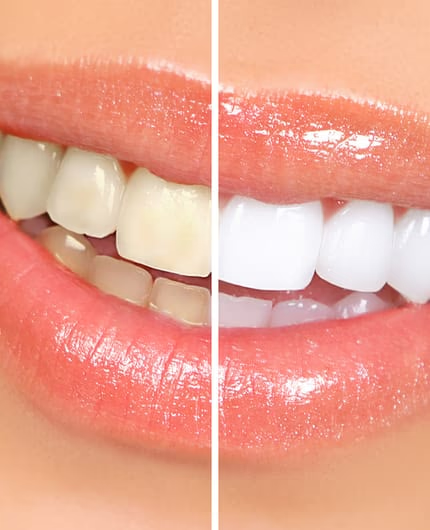
Teeth whitening
Professional whitening to lighten stained or dull teeth, with a check of your teeth first and honest advice on the results you can expect.
Learn more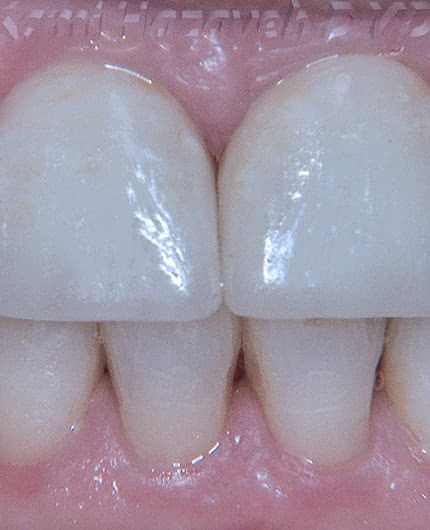
Crowns and bridges
A crown caps and protects a damaged tooth; a bridge fills the gap left by a missing one. Both are designed and made in-house to match your teeth.
Learn more- 08 Every treatment, from whitening to All-on-4 All services